Rhode Island Security Deposit Damage vs. Wear and Tear: 20-Day Itemization & 30-Day Notice
Rhode Island security deposits may cover specified unpaid rent, reasonable cleaning or trash costs, and tenant-caused damage beyond ordinary wear. Learn the 20-day accounting rule and separate 30-day month-to-month notice rule.
The short answer
Rhode Island treats two move-out questions separately: what may lawfully be deducted from a security deposit, and whether a month-to-month tenancy was terminated with the required notice. Under R.I. Gen. Laws § 34-18-19, a residential security deposit may be reduced by unpaid accrued rent, reasonable cleaning expenses, reasonable trash-disposal expenses, and physical damage to the premises beyond ordinary wear and tear caused by the tenant's noncompliance with statutory duties. The deductions must be itemized in a written notice.
For a month-to-month tenancy, § 34-18-37 currently requires written termination notice at least 30 days before the termination date stated in the notice. Giving less than 30 days can create a separate tenancy or rent question, but it does not automatically authorize a landlord to keep the entire security deposit. The deposit accounting still has to fit § 34-18-19.
What Rhode Island allows a landlord to deduct
Section 34-18-19(b) identifies the categories that may reduce the deposit after termination: unpaid accrued rent, reasonable cleaning expenses, reasonable trash-disposal expenses, and physical damage other than ordinary wear and tear that the landlord suffered because of the tenant's noncompliance with § 34-18-24. The landlord must itemize the deductions in a written notice delivered to the tenant.
That means the deposit should not be treated as a general-purpose fund for every move-out complaint. Identify each proposed charge, connect it to a statutory category, and preserve the lease, payment history, move-in condition records, move-out photos, communications, and repair documentation supporting the amount actually claimed.
Damage and ordinary wear are not the same thing
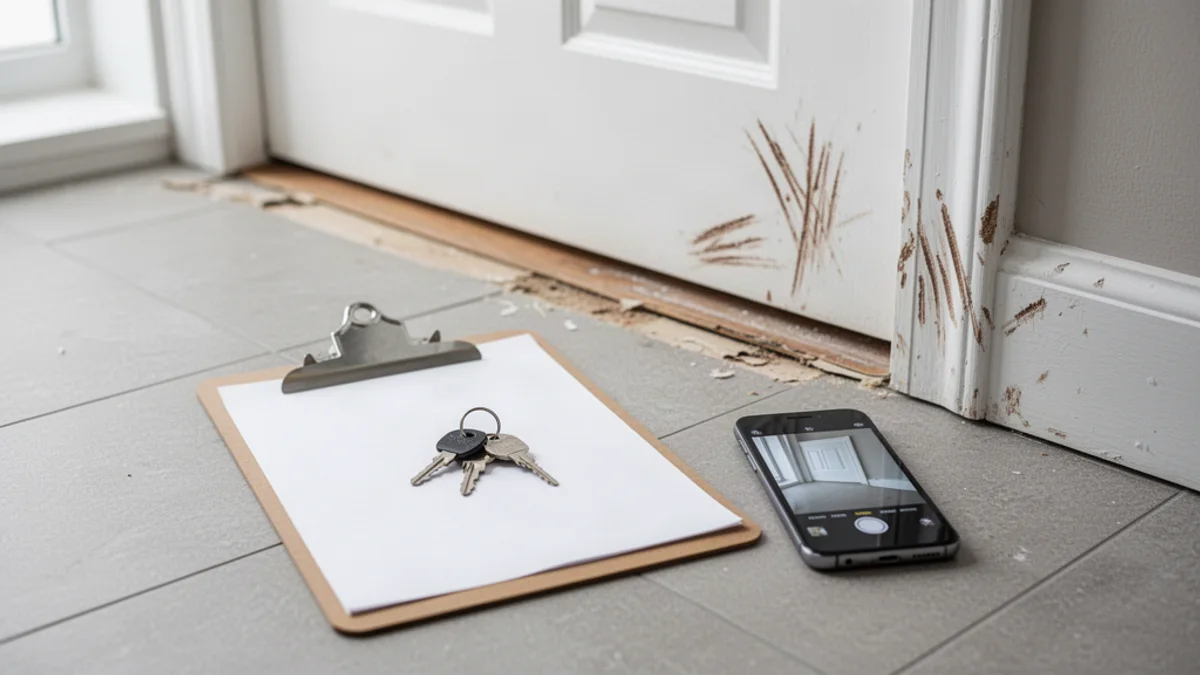
Rhode Island's deposit statute expressly excludes ordinary wear and tear from physical-damage deductions. The statute does not provide a photo-by-photo price chart for scratches, worn flooring, paint marks, pet damage, or aging materials, so a social-media opinion about a picture is not a substitute for evidence about cause, condition, age, prior damage, workmanship, and the work reasonably needed to restore the property.
For example, a gouged or clawed surface may raise a different issue from gradual fading or normal traffic wear, but the legal and factual result depends on the actual condition and evidence. Compare move-in and move-out photos, inspection notes, maintenance history, the length of the tenancy, and repair documentation instead of assigning an arbitrary number to a picture.
Rhode Island's deposit accounting deadline is 20 days after the latest statutory trigger
Section 34-18-19 requires the landlord to deliver the written itemized notice together with the security-deposit amount due within 20 days after the later of three events: termination of the tenancy, delivery of possession, or the tenant providing a forwarding address for purposes of receiving the deposit.
Because the statute uses the later of those events, record each date separately. Keep proof of the termination date being asserted, key or possession return, the forwarding address, the date the accounting was sent, and the refund amount. A disputed move-out or notice date can matter to the timeline.
Less than 30 days' notice is a separate month-to-month issue
Section 34-18-37(b) says either the landlord or tenant may terminate a month-to-month tenancy, or another periodic tenancy longer than a month but shorter than a year, by written notice delivered at least 30 days before the termination date specified in the notice. Week-to-week and year-to-year tenancies use different statutory periods.
If a month-to-month tenant gives less than the required notice, do not convert that fact into an automatic forfeiture of the deposit. Determine the tenancy's legally effective termination date, what rent actually accrued under the agreement and law, and whether any amount remains unpaid. Section 34-18-19 separately allows deduction of unpaid accrued rent, but the amount must be tied to the actual obligation rather than assumed to equal the full deposit.
How to document possible pet or physical damage
Take dated move-out photographs and wider context photos before repairs. Preserve the move-in condition report and earlier inspection photos so the same surface can be compared over time. Keep maintenance records that could show preexisting damage, installation problems, water intrusion, ordinary aging, or prior repairs.
For the amount claimed, retain repair invoices, contractor or handyman estimates, receipts, materials records, or other evidence showing what work was reasonably needed and what it cost or is expected to cost. Rhode Island's statute does not create a universal depreciation schedule or require a specific number of bids, so avoid inventing a formula that is not in the law.
The deposit cap and remedies still matter
Section 34-18-19(a) generally caps a residential security deposit at one month's periodic rent. The statute contains a separate rule for certain furnished apartments with furniture valued at $5,000 or more, so furnished-housing situations should be reviewed under the full section rather than the ordinary deposit rule alone.
If a landlord fails to comply with subsection (b), subsection (c) says the tenant may recover the amount due together with damages equal to twice the amount wrongfully withheld and reasonable attorney fees. That remedy does not mean every disputed deduction automatically produces double damages; the facts and statutory compliance still have to be evaluated.
Use Max Rental Tools to keep the move-out record organized
Use a Move-Out Condition Report and Property Photo Evidence Log to document what the property looked like, then use a Security Deposit Itemization and Security Deposit Refund Statement to separate each claimed deduction from the balance being returned. A Rent Ledger can help identify whether any unpaid accrued rent is actually outstanding.
Those documents organize the record; they do not decide whether a specific scratch, broken surface, cleaning charge, or short-notice rent claim is legally deductible. Use the Rhode Island General Assembly sources linked below as the controlling starting point and obtain individualized legal advice when the termination date, responsibility for damage, or amount due is genuinely disputed.
Common questions
How long does a Rhode Island landlord have to return a security deposit?
Under R.I. Gen. Laws § 34-18-19, the landlord must deliver the itemized written notice and the deposit amount due within 20 days after the later of tenancy termination, delivery of possession, or the tenant providing a forwarding address for the deposit.
Can a Rhode Island landlord deduct for ordinary wear and tear?
No. Section 34-18-19 excludes ordinary wear and tear from the physical-damage deductions allowed from a residential security deposit.
Can reasonable cleaning and trash-removal costs be deducted?
Section 34-18-19 expressly includes reasonable cleaning expenses and reasonable trash-disposal expenses among the listed deposit deductions after termination, subject to the statute's itemization requirements.
Can a landlord keep the whole deposit because a month-to-month tenant gave less than 30 days' notice?
Not automatically. Section 34-18-37 addresses termination notice, while § 34-18-19 separately controls security-deposit deductions. Unpaid accrued rent may be deductible if actually owed, but the landlord should determine the lawful termination and rent obligation rather than treating short notice as automatic forfeiture of the entire deposit.
How much notice is required to end a Rhode Island month-to-month tenancy?
The current text of R.I. Gen. Laws § 34-18-37(b) requires written notice delivered at least 30 days before the termination date specified in the notice for a month-to-month tenancy or another periodic tenancy longer than a month but shorter than a year.
Official sources
Rhode Island General Assembly — § 34-18-19 Security DepositsRhode Island General Assembly — § 34-18-37 Termination of Periodic TenancyContinue your check
Use the state directory for current jurisdiction-specific rules, calculate the proposed increase, then prepare the appropriate rental document only after the legal-rule checks are complete.