California First + Last Month's Rent + Security Deposit: Is It Legal in 2026?
California counts last month's rent toward security for deposit-cap purposes. Learn the 2026 one-month rule, small-landlord exception and student-housing checks.
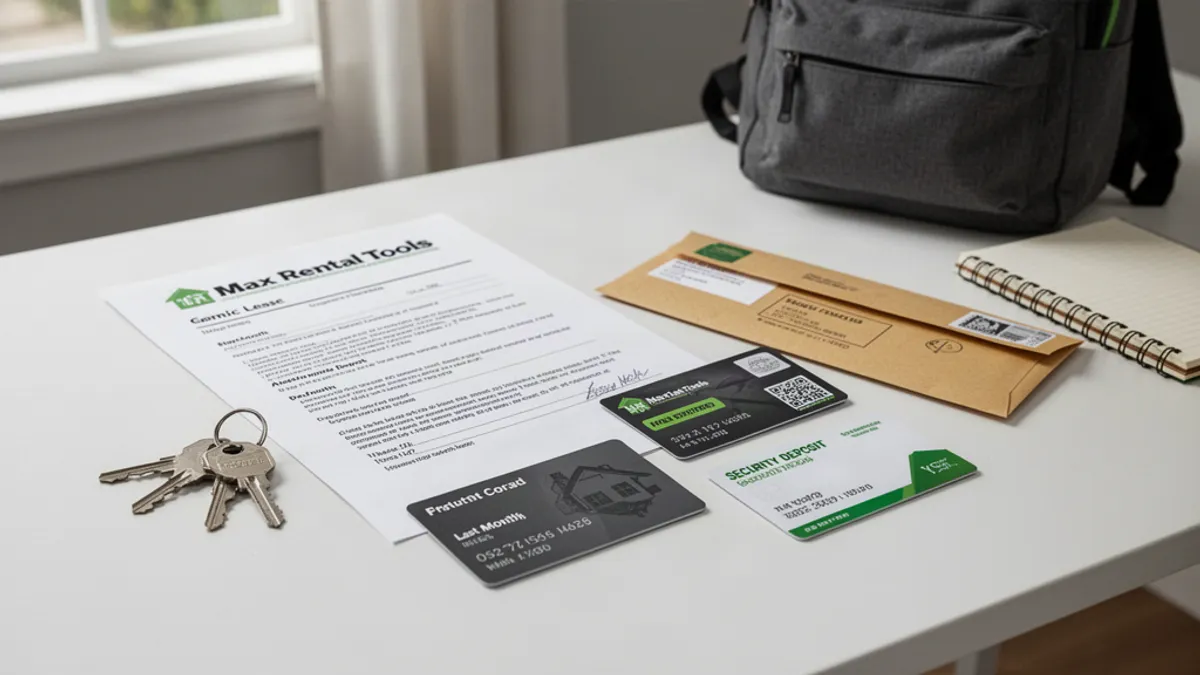
The short answer
California does not treat every move-in payment as a separate unlimited charge. Civil Code section 1950.5 defines residential “security” broadly and, for most landlords, generally limits security demanded or received to one month's rent in addition to the first month's rent paid on or before initial occupancy. Money labeled “last month's rent” can count toward that security total rather than sitting outside the cap.
That means a move-in request described as first month's rent, last month's rent, and a separate security deposit should be tested by separating the first month's rent from the other security-like payments. If the last-month payment plus the separate deposit exceeds the landlord's applicable security ceiling, the labels alone do not make the amount permissible. A statutory exception can change the ceiling, so ownership structure and property count still need to be verified before reaching a conclusion about a specific rental.
Why last month's rent can count as security in California
Civil Code section 1950.5 defines security to include payments, fees, deposits, or charges imposed at the beginning of the tenancy for specified purposes, including an advance payment of rent. The statute then states the ordinary security limit separately from the first month's rent paid on or before initial occupancy.
The Berkeley Rent Board's current security-deposit guidance applies that distinction directly: it explains that last month's rent is considered part of the security deposit for purposes of the cap, while first month's rent is not. Calling one payment “last month” and another “deposit” therefore does not automatically create two separate security allowances.
First month's rent is treated differently
For the ordinary rule, Civil Code section 1950.5(c)(1) allows security up to the applicable cap in addition to the first month's rent paid on or before initial occupancy. In a common one-month-cap tenancy, first month's rent can therefore be collected separately from a total security amount of up to one month's rent.
The Berkeley Rent Board gives a practical example: for a $2,000 monthly rent under the ordinary one-month security limit, the typical maximum move-in collection is $4,000—$2,000 for first month's rent and $2,000 total security, however that security is labeled. The landlord cannot create another full month of security simply by calling it last month's rent.
The small-landlord exception can raise the security ceiling
California's current statute includes a limited small-landlord exception. It can permit security up to two months' rent when the landlord is a natural person, or an LLC whose members are all natural persons, and owns no more than two residential rental properties that collectively include no more than four dwelling units offered for rent.
The exception does not apply to a prospective tenant who is a service member. Because the rule depends on ownership and the number of dwelling units offered for rent—not merely how many people live in one house or how many lease documents exist—a tenant should not assume the exception applies based only on the appearance of the property or the number of roommates.
Room-by-room and student housing still require a property-specific check
Shared student housing can make the unit-count question less obvious. Separate bedroom leases, a main house plus an accessory unit, or several occupants do not by themselves answer how many “dwelling units offered for rent” the owner has for purposes of the small-landlord exception. The statute's ownership and property-count requirements must be applied to the actual property configuration and the landlord's portfolio.
Berkeley's Rent Board notes that it cannot determine for a particular new tenancy whether the landlord qualifies to collect one or two months of security. When the small-landlord exception is disputed, ask for the ownership basis being relied on and consider contacting the Rent Board, a housing counselor, or a qualified California landlord-tenant attorney for property-specific advice.
A narrow advance-rent exception is different from ordinary last month's rent
Civil Code section 1950.5 also allows an advance payment of at least six months' rent when the lease term is six months or longer. That is a specific statutory exception and should not be confused with an ordinary move-in request for one month labeled as “last month's rent.”
If a landlord relies on an advance-rent exception, compare the actual payment structure and lease term with the statutory language rather than assuming any prepaid future rent falls outside the security rules.
Berkeley can add local deposit-interest requirements
For rentals covered by Berkeley's rent ordinance, the Rent Board explains that landlords generally must pay annual interest on security deposits. That local rule is separate from California's statewide ceiling and does not change whether a landlord qualifies for the one-month or small-landlord two-month limit.
A Berkeley renter should therefore check both questions: how much security could lawfully be demanded at move-in, and whether the deposit is subject to Berkeley's annual-interest requirements after it is held.
What to document before disputing move-in charges
Keep the signed lease, any room-rental or addendum documents, the move-in funds receipt, payment ledger, screenshots of the payment portal, and written messages showing exactly how each charge was described. Record the monthly rent, the amount labeled first month's rent, the amount labeled last month's rent, every separate deposit, and the date each payment was demanded or collected.
If the landlord says the two-month small-landlord exception applies, ask for the basis for that position rather than guessing from the building size. The key facts include the landlord's ownership form, how many residential rental properties the landlord owns, and how many dwelling units those properties collectively offer for rent.
Use Max Rental Tools to organize the move-in record
Max Rental Tools includes a Move-In Funds Receipt, Security Deposit Receipt, Residential Lease Agreement, Move-In Condition Report, and Rent Ledger. Those tools can help document what was paid and why, but Civil Code section 1950.5 and any applicable local rule remain the controlling legal sources.
For student or shared housing, also keep a clear record of who signed each agreement and which unit or room the agreement covers. Good records make it easier to separate first month's rent from security and to identify the exact amount that needs legal review.
Common questions
Does last month's rent count toward California's security-deposit limit?
For purposes of California's security rules, advance rent beyond the first month can fall within the broad definition of security. Berkeley's Rent Board expressly explains that last month's rent is considered part of the security deposit, while first month's rent is not.
Can a California landlord collect first month, last month, and another security deposit?
The first month's rent is treated separately, but the last-month payment and other security-like charges must be measured against the applicable security ceiling. For most landlords that ceiling is one month's rent; a qualifying small landlord can have a two-month ceiling.
What is California's small-landlord security-deposit exception?
The current statute can allow up to two months' rent in security when the landlord is a natural person, or an LLC made entirely of natural-person members, and owns no more than two residential rental properties collectively containing no more than four dwelling units offered for rent. The exception does not apply to a prospective service-member tenant.
Do separate bedroom leases automatically mean each bedroom is a dwelling unit?
Do not assume that. The statute uses the term “dwelling units offered for rent,” and the answer can depend on the actual property configuration and ownership facts. Separate leases or several roommates do not by themselves resolve the statutory unit count.
Does Berkeley have additional security-deposit rules?
Yes. Berkeley's Rent Board provides local guidance on security deposits and explains annual deposit-interest requirements for covered units. Those local rules should be checked in addition to California's statewide cap.
Official sources
California Legislative Information — Civil Code § 1950.5Berkeley Rent Board — Security DepositsBerkeley Rent Board — Important Changes to Security Deposit LawCalifornia Attorney General — Landlord-Tenant IssuesContinue your check
Use the state directory for current jurisdiction-specific rules, calculate the proposed increase, then prepare the appropriate rental document only after the legal-rule checks are complete.